Showing posts with label Concerned Bloggers Association. Show all posts

Wednesday, 13 February 2013

Something to Say: Regardless

Regardless
The topic of this month's Concerned Bloggers Association unofficial public service announcements is family planning. There is a lot that can be said about this topic, encompassing, as it does, not only the idea of getting advice on planning for families, but also contraception, emergency contraception, abortion, sexual rights, expectations, and prejudices, and disease prevention. But what comes to the forefront of my mind is the scare that took hold of the internet a few months ago surrounding family planning in the USA and the idea that clinics might be closed down. 

This is how I see it. 

Regardless of whether there are family planning clinics, whether there is access to contraception or not, whether abortions are legal or not, whether HIV is rampant or a myth, people are going to have sex. 
Women are going to get pregnant.
There are going to be unwanted pregnancies. 
Those unwanted pregnancies are going to go one of three ways - happily, horribly, or terminated. 
Women are going to have abortions. 

What it comes down to, really, is whether we would rather provide a safe environment for people to get information, help, contraception, and, if needs be, pregnancy termination, or we think it's acceptable for the alternatives, which, in many cases, don't even bear thinking about, to take place. Whatever your personal opinions about abortion and sexual rights, we have to accept that they are just that - our personal opinions - and by banning these things, or making them taboo and dirty, we are simply making it difficult for people in potentially horrendous situations to get the help they need. 

I don't think anybody particularly enjoys the ideas of abortions. I think it would be fair to assume that anybody even considering one is in pretty dire straits. Do they really need more hassle? Do you think they really need to be judged?

The best we can do is create that safe environment to seek information and make a decision based on a realistic picture of their situation in the face of all of the options. We need to educate ourselves and our children so that they can make decisions in the first place, but also know where to look when they need to be re-versed in those options.

They are going to do it anyway. 

LINKS:
 (UK-centric, but all provide useful information for wherever in the world you live)
Family Planning Association - help and advice / find a clinic near you

Some of these pages look daunting, and yes, in some instances, they refer you to a doctor. But a doctor is not there to judge you, and if your doctor does, keep your cool, return to the reception desk, and request to see another doctor. Once you are in a better position mentally and physically, complain about that doctor, because it's just not acceptable. It's easy to say, but, be brave. 

Make the right decision for you - because, ultimately, that will probably be the right decision for your potential children, too.

This public service announcement was brought to you by The Concerned Bloggers Association. For more information, please contact Marleen Vaughan.

Monday, 28 January 2013

Something to Say: SAVE THE ARTS

Aye my lord, honest
Those of you will peripheral vision might have noted that I graduated last Summer (2012) with a BA Hons in Theatre and Performance Studies from the University of Warwick, England, UK. I have been involved with drama clubs since I was seven/eight. They were run by my school,  and allowed Key Stage Two children the opportunity to be involved in Drama beyond the kind of hot-seating exercises labelled as 'Drama' in our English classes. I picked it up again in high school, and have been studying the subject ever since. 

The most wonderful things about studying a subject like Theatre and Performance (as opposed to Drama, which is mostly the study of written theatrical texts) are the diversity of subject matter, and the people. You cannot avoid getting to know people when you are forced to work with them on a show. For the duration of rehearsals, you practically live together, and you begin to learn everything about them from their strengths and weaknesses, to their body's pliancy, and just how much of a jerk they are when they've skipped a meal. During my degree, I have studied everything from Victorian Britain to the American Avant-Garde to Islamic culture to Guantanamo Bay. I have written for the stage, devised, planned interventions, given presentations and delivered project pitches.

Remember the light and believe the light - nothing matters more
I know I have only flagged up Drama/Theatre here, but the arts as a whole are important. There have been so many studies done now that show the benefit of creative outlets - particularly Drama - to everybody from toddlers to those with learning difficulties to criminals. I'm not trying to suggest that the world should become actors, but we really do need to consider the role the arts play in our lives and our education, development, and rehabilitation, and make sure that they aren't allowed to fall by the wayside. 

Cutting funding to the arts during the recession is understandable, but still not acceptable. It's a cheap shot that fails to take into consideration how integral they are to our education, personal development, and mental well-being. Because the big musicals continue to run in the West End, most people don't see the damage the cuts to funding are doing. In the 50s and 60s, and even into the 70s, the UK had a fantastic reputation for Theatre that did not rest on musicals, but on potent new writing that sought to deal with real-life issues that faced real-life, every-day people in real-life every-day Britain, and across the world. And when the Conservative Government cut funding to the arts in the 80s to almost nothing, we lost that reputation. We lost our gritty dramas, we lost our clear-headed and cutting new perspectives. The writers and the actors crawled under the kitchen sink and stayed there. 

I'm sorry said the soldier
When you turn your television on, you're watching art. When you see beautiful buildings going up, landscaped gardens, stunning clothes and inviting signage inviting you into shops and cafes and museums...when you pick up a book, buy a picture for your wall, download wallpapers for your computer, watch a film, decide you might have a trip to the theatre, listen to your favourite song...this is art. This is the arts. This is made possible by the arts. This has been inspired by the arts.

Next time you see George Osborne, or whoever his equivalent is in your country, standing there, taking cheap shots at the arts, take note. He has said he wants more cuts, and we'll be damned if he isn't coming to cut us off. The arts, and again Drama in particular, are being pulled out of schools, pulled out of the national curriculum, like so many weeds. The arts isn't a weed. It's the concrete between the building blocks of our society and culture. 

Michael Gove, the Education Secretary, wants to cut arts from the curriculum. This argument in the Guardian dated 22/01/13 seems to think those that want to save the arts want to do away with all other subjects, and that is not what is being said at all. It's a childish attempt to discredit art and those that champion it. Yes - childish. This article in the Telegraph dated the same day is more grown-up, and highlights what is at the heart of the problem - that the arts, despite all of the studies being done, are just not valued enough. If this doesn't start to change, I think Tracy Emin's prediction of a riot might well come true - and I reckon I'll know a good handful of those who'll be standing in the ranks of those marching on Downing Street. Maybe I will be there myself!

SAVE THE ARTS. Encourage your children. Petition the local schools. Write to David Cameron. Support local amateur dramatics groups. Support your local theatre. Support the London theatres. Go to the cinema. Buy your music. Buy painted pictures, prints, photographs. Go to exhibitions. Find time yourself to write and draw and try getting involved in something performative in your area.

This public service announcement was brought to you by The Concerned Bloggers Association. For more information, please contact Marleen Vaughan.
 Read other posts on saving the arts: 
These are the ones listed on the Concerned Bloggers Association site at the time of posting, but check here - here! - for more.

Thursday, 6 December 2012

Something to Say: With Winter


This time of year can be particularly difficult, for all of us. Not just because of the holidays, but also because of the cold, and the dark. Everything always seems worse in the dark. 

Sometimes, we all need some help. Don't suffer in silence. There are people around you who are willing to listen - though we aren't always sure that they are. Speak to people you trust, and remember that they love you. When you become somebody's friend, you sign up for the good and the bad.

If, for whatever reason, you don't feel that you can talk to those people, there are others who are willing to listen. My first stop would be the NHS website - here is the page on getting help with suicidal thoughts. There are the Samaritans, and Childline, and the Campaign Against Living Miserably (which is specifically aimed at men). There's also the Depression Alliance - and a whole host more, all of which are listed by the NHS. If you are 19 or under, you can get help from Mind for free (you have to pay if you wish to speak with a counsellor if you are older, sadly). If one isn't working for you, try another. Sometimes, a different approach is all you need.

There is no shame in needing some help. At some point, all of us do. I have - I spoke to my college counsellor. I know other friends who have used similar services. It's about getting what you need to work your way through whatever it is that is pulling you down - and nothing more. If you don't want to tell anybody about it, don't. It's for you, not them.

I think that one of the most awful, and the most awesome, things about the human spirit is that it endures, even when we don't think it can or don't want it to. I have railed against that, thrown my dummy in the dirt more times than I can tell you, threatening to refuse to conform to this fact, but then I would calm, and come back around to the helpless and yet empowering truth of it. So please...keep going.

I hope that this doesn't sound patronising.

Monday, 19 November 2012

Something to Say: Let's Be Brave Together

...gulp...
The Concerned Bloggers Association would, this month, like to encourage you to give blood. Faced with this month's topic, I floundered a little. The simple fact is, shamefully, that I have never given blood.

There are reasons. In the UK, at least, there are regulations regarding gender, age and weight, and until fairly recently, I did not tick all of the right things in all of the right boxes with regards to those. I also suffer sometimes with anaemia, and that means I can't necessarily give blood. My iron count is a law unto itself.

But I am also afraid of giving blood. I am not, generally speaking, a squeamish person (too many horror movies!), but I don't like needles, and I cannot watch the nurse draw blood from my arm for a test. It doesn't make me sick or pass-out, or anything like that, but I think there is something fundamentally wrong about the idea of my blood being outside of my body, and it makes me feel desperately uncomfortable.

The only thing wrong here, though, would be letting that fear stop me. Giving blood is important, and who knows - one day I might need a whole lot of someone else's blood myself, and if everybody was too afraid to donate, where would I be then? Several members of my family give/have given blood. On a couple of occasions, too, I believe, they have needed it. 

On top of that, it is possible that I have a rare blood type. My father has, though my mother hasn't - and apparently that is not a concern because, if anything happened to me or my brothers, we could be given whatever type of blood it is that my mother has. However, if the three of us have the same rare type of my father, there is even more of an imperative, I think, to give blood. The demand might not be so high, but the stock of it must be lower. 

According to the NHS Give Blood website, 96% of us in England and North Wales rely on the other 4% to give blood. That doesn't really seem right, does it?

If, like me, you are a little bit scared of the process, or you just want to find out more, that website is really useful. There is a virtual tour of what happens when you go to give blood, as well as information about finding out where and when you can donate, and what happens to your blood once it has been donated. There is also a whole wealth of information about your safety, the checks they do to make sure you really are eligible, and the care you can expect to receive.

It really does seem to be quite easy, though - you talk to the nurse, sit down, give blood, have a cup of tea and a biscuit, and go home. Simple as. If they think you are healthy enough to do it, why not?

So come on. If I can be brave and build myself up to this, so can you. 

'Do something amazing. Give blood'.


This Public Service Announcement was brought to you by the Concerned Bloggers' Association. If you would like to become involved, please contact Marleen Vaughan for more information.

Wednesday, 24 October 2012

Something to Say: Reading, Real Horrorshow

Once upon a time...
When I was little, my aunt used to read me stories before I went to sleep every night. I grew up with Harry Potter and Artemis Fowl and Lyra Silvertongue and Sally Lockhart and Sabriel and Sephy Hadley and Eragon and Lestat de Lioncourt and Richard Sharpe and Alex; defeating all manner of evil magicians and banishing the undead and casting spells and being cruel to be kind and drinking milk with knives in it - real horrorshow, like. What I'm trying to say is that I am an avid reader, and can lose myself in a book for hours.

Roar!
 In my personal experience, reading cures a multitude of ills. Not only does it offer escape, but also a way to advance in the physical (first) world. Reading helps to develop language and vocabulary and concentration and imagination. It can inspire and excite, or offer a quiet refuge. It can calm. Many a time, when miserable, I have turned to the pages of Anne Rice's Interview with the Vampire - my copy of which is now very well-thumbed, the spine beautifully lined.  Just the first few lines serve to soften my temper. 

The cause the Concerned Bloggers' Association is championing this month is reading. I guess that, in today's society, it's easy for reading to slip down the priority list. Everything is 4chan and Facebook and the Disney Channel - and Second Life! -, the here-and-now generation who can update their statuses whilst tweeting whilst playing Grand Theft Auto on the Xbox and uploading a game stream live to Youtube. They wait for everything to come out on film - they don't necessarily want to sit down and read a book.

...magic!
That's a blanket statement - there are plenty of children and young adults about today who like to read. I know this. But having grown up with two younger brothers who are so typical of the here-and-now generation I described, I know that there are plenty who do not make the time to read a book. I appreciate that such isn't always their fault - or anybody's fault - and some people just don't take to reading. And that's fine - but you can never get away from it completely.

But that's why reading is so important. Now, more than ever, a book can offer a slower pace, a bit of space, and a chance to appreciate and enjoy the language we spit out every day without even thinking about it.

The End.
So read anything. Novels. Short stories. Manga. Poetry. Limericks. Newspapers. Blogs. Journals. Essays. Research papers. Emails. Cereal packets. Signs in streets and bus shelters and on the side of buses and taxis and, I don't know, buildings. It doesn't matter what you read so long as you read something, take in those words, see them in action.

 This Public Service Announcement was brought to you by the Concerned Bloggers' Association. If you would like to become involved, please contact Marleen Vaughan for more information. 
(I'm sure she'll take her head out of her comic to answer you :))

Thank you to Salix Southpaw for posing for my photo. So much fun <3 (and some singed eyebrows, but who needs eyebrows?!)

Saturday, 29 September 2012

Something to Say: Release the Dogs!

The things I do for Marleen Vaughan!
It is that time of the month again, and this month, the Concerned Bloggers Association are addressing the nasty problem of puppy farms. The Kennel Club define puppy farmers as 'volume breeders who have little regard or consideration for the basic needs of their breeding bitches and puppies', who will 'breed over and again from their breeding bitches, damaging their health and will often kill or abandon them when they are no longer of use', and 'keep puppies in poor conditions where they have no access to day to day sights and sounds and fail to become properly socialised' which can be dangerous not only for the puppy, but the family coming to take them home. In 2006, the BBC launched an investigation into and created a documentary on the subject, putting together a list of advice to help the general public become more aware about the issue of puppy farming.

I confess, until I saw the topic for this month, I had never given much thought to puppy farming. When I think of such now, the image of battery chickens springs to mind - and that's a horror that I think we are all more than familiar with. The scary thing is that puppy farmers sell through what appear to be perfectly reputable shops and businesses, and so it isn't always obvious that the puppy you are buying has been treated poorly. 

What can you do to help? I don't think it's as simple as just not buying puppies. And if you do buy a puppy that you suspect has come from a puppy farm, it would perhaps be prudent to inform the RSPCA of your suspicions. The new RSPCA advert on the TV suggests that they now have the power to intervene in situations before animals get hurt, so they are investigating as many claims as possible. These dogs need to be looked after properly - the facilities are there! - so please, do report anything you think suspicious.

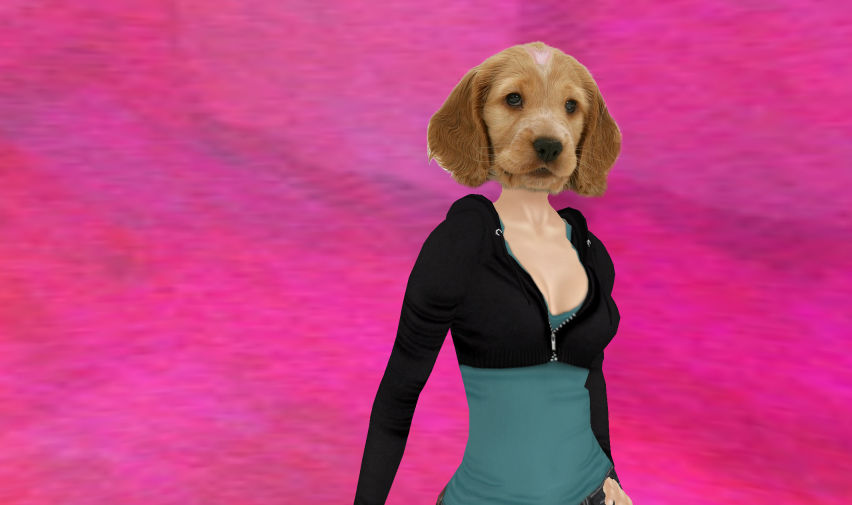
(Puppy head image taken from here.)

 This Public Service Announcement was brought to you by the Concerned Bloggers Association. If you would like to become involved, please contact Marleen Vaughan for more information.

Monday, 3 September 2012

Something to Say: Responsibility

I am officially a bad blogger. I am behind with my posts for the Concerned Bloggers Association. Now that I am back in my homeland, I am rectifying this. 

Sort of. The topic for August's Concerned Bloggers posts was to be depression. I confess, when I saw this, I paled. Depression is an incredibly difficult topic to talk about, and something that is very close to the heart of our head honcho Marls Vaughan, as she described in her own post for the month. It isn't that I am afraid to write about depression, but that I wasn't sure how to write about it, incorporating my own experiences (and inexperiences) and understandings of it.

I then came across a fellow Concerned Blogger's post on Post-Traumatic Stress Disorder, and I found my voice. I knew what it was that I felt needed to be said. I will admit up-front: I have no facts and figures to base this on (I think that makes me an even worse blogger - I'm going to have a very sore behind by the time Marleen is done with me!) DeCuir's post has much more of that - I will place a link to her piece at the end of this post.


In the United Kingdom, post-traumatic stress disorder is a well-debated topic. I confess, I don't know the up-to-the-moment thinking about it, but I do know that, only a couple of years ago, there were programs on the BBC and Channel Four talking about whether or not the Government and the NHS should accept PTSD as an actual problem. A friend of mine whose father served in the Gulf War and his family were interviewed for one such programme, and the interviewers asked lots of questions about what their day-to-day life was like looking after somebody who suffered with such.

Here is what galls me. Whatever the Government and the NHS want to call these issues, I am not sure how it is really possible to have a debate about the existence of what we know as PTSD. We know it exists. We have seen it. It has been written about. Heck, it's made its way into the theatre - and that is, historically, the last medium to catch onto these things. We can see that people who have been to war - and, as Guen DeCuir points out in her piece on the subject, people who have suffered at the hands of natural disasters - come home and do not behave in the same way in which they did before they left. It almost seems stupid to point it out. I'm sitting here thinking to myself, well, of course they don't!

And I also think, equally obviously, that as a nation that sends its people to war, we have a responsibility to those who fight in our name, and those who return home, to deal with the consequences of that war and take care of them. 

I realise that this is not as easy as it sounds. I realise that there are, in some instances, systems in place to help and take care of people with PTSD and their families. But why was this ever a question? Why did we ever debate about this?

Because it's an unsightly consequence. Because if we admit to things like post-traumatic stress disorder, we have to admit, publicly, on an international level, that War Is Bad. And if War Is Bad, we have to think a lot harder about it before we march our young men and women off to fight. 

But here's the thing. If we are mature enough to declare war, mature enough to extend a hand of help (no matter how shaky the foundation of such an idea might be), we are mature enough to acknowledge the consequences of such actions, and help the people who, for whatever reason, agree to do the dirty work for us. 

So, as the Americans say, support our troops. Whether you are anti-war or not, you can hope for the best for our soldiers. The best for the world's soldiers. You can lend a helping hand if/when it is needed. And when the television crews revive the argument, which I have no doubt they will, and they come knocking on your door, think about how stupid you're going to sound when you try to deny that war (and natural disasters) have an effect on the people that fight them. 

That's what it boils down to, really. At least in my eyes.

This Public Service Announcement was brought to you by the Concerned Bloggers Association.


Read Guen DeCuir - my fellow Concerned Blogger - 's post here - here. 

If you would like to get involved with the Concerned Bloggers Association,
please contact Marleen Vaughan.

Friday, 6 July 2012

Something to Say: Peace, Panda

Roar!
The Concerned Bloggers' Association are focussing on the issue of endangered animals this month. I may or may not have had a hand in the selection of this topic. And I may or may not have immediately gone out and picked up these tiger stripes, knowing that I was going to paste them onto Kitti, and then paste Kitti onto the top of this post. Whether you think my picture is the worst thing ever, or the best, I hope she caught your attention. And don't worry; the panda is coming up later.

There is an awful lot that could be said about endangered animals and the organisations that work to protect and conserve them, but I imagine you've seen/heard/read a lot of it already. Every other day, there is an advert on ITV trying to emotionally blackmail you with music composed by Hans Zimmer to donate money to save this or that animal. On the in-between days, a little man appears at your door with a pile of leaflets and forms under one arm, and a horde of toy whales under the other, begging you to sign up to save something's life, and he won't go away until you have, even if you tell him you are halfway through your dinner. 

At the moment, we're all feeling a little out-of-pocket, and the phrase 'charity starts at home' is more popular than ever. And that is completely understandable - and made a thousand times worse when you flick on the TV or open your newspaper and feel bombarded with charity ads for just about every cause under the Sun. I don't think it would be unfair to say that we, as a society, are emotionally jaded. And as proof of that, I don't think I have got teary over the Children in Need programme once in the last ten years - if I ever did. And they work really hard to make you cry.

But there is the thing; just because the television rattles on and on (kind of like me) does not mean the issues aren't real, and important. That goes for all of them - though our focus, now, is endangered animals. There is no real way that we can help them all - but there are little things we can do that, adding up, could make a big difference.

According to the All About Wildlife website, these are the top ten endangered animals, globally:

  1. Ivory-billed Woodpecker
  2. Amur Leopard
  3. Javan Rhino
  4. Greater Bamboo Lemur
  5. Northern Right Whale
  6. Western Lowland Gorilla
  7. Leatherback Sea Turtle
  8. Siberian (or Amur) Tiger
  9. Chinese Great Salamander
  10. Kakapo Parrot
Did you even know half of those animals existed? Me neither!  And at this rate, we might never get to see them, even through the eyes of David Attenborough. There are also lists assessing the population of global marine species, as well as endangered plants - which is equally important! Anybody with internet access can find this kind of information - and they can also find out what we can do to help. 

The page linked as 'endangered plants'  lists some suggestions of real, practical things you can do - at home! - to help conserve plants across the world. The marine species assessment page, too, talks about conservations projects and shows you what experts and those in the know are doing about the problems at hand.

In terms of the animals, I imagine you already know what to do. But here are the links for the World Wildlife Fund (here!) and Save the Tigers (here!), which are just two sites I know of that can help to make a difference to the animals in that list - and many others that don't quite make the top ten, like the pandas that feature so often on the TV.

As I have said, there is no way that each of us can help every one. But if we give a little, just to the one...I don't know...that captures our imaginations, or our hearts, the most - or, maybe, the one that you didn't even know existed! - then maybe we can make a difference. And we're so diverse, we'll probably cover the spectrum.


And okay. I give in. Here it is. The panda.

Panda!


 Only for the Concerned Bloggers' Association would Kitti get so dressed up and cutesy. If you would like to be involved, please contact Marleen Vaughan.

Friday, 8 June 2012

Something to Say: Label Smabel

The Concerned Bloggers Association strikes again: this month, we're talking about HIV and AIDS. The co-ordinator of the project, Marls Vaughan, usually includes a notecard with the preliminary research which suggests angles we could take in our blog post (all of which are very good angles) but, new as I am to the association, I have decided to be naughty and write a little bit about something I noticed when I went to do some further research. I think it's important - so here I go.


The topics of HIV and AIDS seem to be confused and convoluted in the general public's understanding of them. We are all aware, I think, of the rhetoric that suggests that HIV/AIDS is a 'gay man's disease', which causes a whole heap of problems when it comes to prevention, diagnosis, and treatment. The title 'gay man's disease' serves not only to belittle the reach of HIV (which can then develop into AIDS, if I understand correctly), but also serves to attempt to contain it - to make it foreign, distant and un-catchable. Suddenly, if you are not a gay man, you don't have to listen to the talks, read the leaflets, or take the precautions; you're immune by virtue of your gender and/or your sexual orientation. 

I remember reading the play Angels in America for one of my classes and being confronted with a scene in which a successful businessman is diagnosed with HIV. He corrects his doctor, informing him that he cannot possibly have HIV; it must be prostate cancer. The scene is powerful because of the intelligent man's refusal, and our awareness, as members of the audience, of the consequences of that refusal and the reasoning behind it. I feel both anger and pity for that man - anger because, as a successful businessman, he potentially has the power to change the image of those suffering with HIV/AIDS, and pity because the society of the 1980s in which he lives has made it virtually impossible for him to believe he might have the agency to do such at all.

HIV/AIDS is too important not to talk about. Far too important. I know that the situation is not, now, as it was in the 80s, but from the material I found on a quick Google search, it doesn't appear that the connotations of the illness have completely gone away, either. Personally, I think this is crazy!

By labelling HIV/AIDS a 'gay man's disease', what you are also doing is narrowing the frame of those involved in another way. It obscures from view those who might surround and care for them - their families, their friends, etc. But also: the successful businessman (I cannot for the life of me remember his name) of Angels in America might well sleep with men, but he also goes home every night to his wife. Every time he sleeps with her, he risks infected her with the virus, too - and, as far as I am aware, she has absolutely no idea, because it is a 'gay man's disease', probably, so she cannot contract it, and neither can her husband. 

The World Health Organisation website has a whole section entitled 'Gender inequalities and HIV' - because men are not the only ones who suffer with HIV and AIDS - and it outlines with scary clarity the way in which the perceptions we have of gender are serving to rob people of the agency to prevent HIV transmission and seek treatment if they do catch it. This applies not just to gay men, who continue to face hostility even in our twenty-first century post-post-modern world, but also to women who are, stereotypically, restricted in access to services by the immobility of looking after children and, in some cases, have their decision-making agency capped by patriarchal systems and hierarchies. Their page explains  far better than I could, so I am urging you - go and read it! The 'gay man's disease' is just the tip of the gender inequality iceberg.

We have organisations in place that are working on information about prevention, diagnosis and treatment. We have organisations in place that are working on those treatments. And we also have social 'organisations' in place that are preventing people from accessing and engaging with these things. 

These issues are global, and I am not for a minute suggesting that we each individually have the power to reach out and fix these things. But we can be aware of them, pass on our ideas, make sure that our own reactions to such are not those that will ultimately be harmful, and maybe, step by step, we can pass on the message. We can begin to change perceptions and connotations and actually help each other. The internet is a powerful thing - people could, rhetorically, be reading this post all over the world, and so I thought, idealistic as it may be, that I ought to raise the issue and hope that it spreads.

Label smabel. HIV and AIDS are not diseases of only gay men, and suggesting that they are isn't going to make you and those around you immune.


June is HIV/AIDS awareness month over at the Concerned Bloggers Association. Over the course of the month, the Concerned Bloggers blog will be listing links to posts on the topic by all of the Concerned Bloggers. Please go and check it out by clicking here - here! - and if you would like any more information, please contact Marleen Vaughan.

Thursday, 3 May 2012

Something to Say: Couch Potato

It would appear that it is that time again, folks, when I use Kitti's face to tell you about something that has more to do with the first world than the second - though you should read it anyway - and this month, it's exercise.

Kitti the Couch Potato
There are a lot of things I could say to you about exercise, and let's face it: we all know that we ought to do some. The problem isn't, I don't think, that we are ignorant to the need to exercise - Hell, I'm sure most of us want to do some! - but that, for whatever reason, we just...don't do any! 

I'm sure that I don't need to tell you, either, how good exercise is for increasing energy levels, dissolving stress, or warding off disease. You know that it's good for you to put your heart through its paces, if you'll excuse the pun - and you know that, when you're exercising, you generally feel better about pretty much everything. Nope, you already know all that.

So what I am going to say is this: I personally find that I spend far too much time in front of my computer. As an undergraduate in my final year at university - exams beginning next week - I don't think there has been a day when I was not at my computer in the last three years. Hell, I've probably been plugged in since I started sixth form college. It's essay after essay, project after project, and then, once that is done, I'm skyping my family who live halfway across the world, or hopping in to Second Life to escape from my first life for a little while and ending up three hours later wondering where the time went. I've just found out, too, that BBC One are airing a new season of Have I Got News For You, so I've been watching some of that on i-player. So you see the trend, here? I never seem to be away from my computer for more than a couple of hours at a time.

Plugged In?

After a couple of days, I start to feel the effects. I don't sleep properly. I don't seem to get very hungry. My legs get sore, my eyes tired, and I find it increasingly difficult to actually get my work done. The words stick in my head, and although I might know the answers, I cannot get them down onto the page with any sort of eloquence at all. What I need is to do some exercise - even if it is only to get up and go for a twenty minute walk to the supermarket, or the post office, or around the marshy field about five minutes walk from my house. Just get out of the house for a while, get some fresh air, and give my body the chance to stretch. And that isn't even trying to get fitter, or to lose weight - that is purely to keep my brain functioning and my body limber.

When it comes to fitness, I imagine I am pretty poor. I have determination and endurance, which can see me through a whole days' worth of practical theatre workshops or rehearsals, but I cannot run for more than about five, maybe ten, minutes at a time, and it has been a good few years now since I played any kind of sport. It's saddening, and is something I intend to remedy once my degree is over. If going for a walk makes me feel better, imagine how good a good game of tennis is going to make me feel!

There was a video doing the rounds on tumblr a short while ago which I think is enlightening and useful. It's positive, and doesn't ask anything more than we are capable of giving.

Once again, for some unknown reason, it will not allow me to embed the video. Click here to go to it on youtube - 23 and 1/2 hours. Please do go and watch it, because if nothing else it is quite inspirational and leaves you with a sense of "well, I can do that!"

Refreshing yourself, losing weight, getting fit: whatever your reasons for exercising, get off the couch, get away from your computer, and go and do something!

This has been a public service announcement on behalf of the Concerned Bloggers Association.
For more information, or if you would like to be involved, please contact Marleen Vaughan.

Sunday, 8 April 2012

Something to Say: Autism

Listen up
I'm going to be straight up with you, like always: this post isn't so much about Second Life. Now hold on a minute - before you throw your dummy in the dirt and storm off! - and trust me when I say that it is important. More important, really, than much else I write on these virtual pages.

There are a group of SL bloggers that, once a month, use their blogs to talk about some really important issues - real issues, that effect real lives, both physical and, by extension, virtual. I have written alongside them before, and now I have been asked to join them. There is absolutely no reason on this planet to say no; Kitti has a voice, so I am going to use it. So listen up, because I've got something to say (never mind that I quite often have something to say. Hush up).
 
Until I received the Concerned Bloggers Association information pack, what I knew about autism could fit into a thimble. To me, autism was connected to the MMR vaccination scare, and I remember the difficulty my Aunt went through when deciding whether to allow her children to have the vaccine all in one go, or each separate. I remember wondering if my whole generation were secretly autistic because we had received the vaccine in one go, and we just hadn't been discovered yet. 

Well, we aren't, and according to the NHS website, the 1998 report that suggested that autism was related to MMR has been thrown out now. Unfortunately, that doesn't mean that Autism has been thrown out, too, and it is estimated that there are over half a million people within the UK who suffer with it.

I don't think that, as a country, we are ignorant to such. We know that autism exists. I'm sure that Channel Four did some documentaries awhile back about an artist who drew the Houses of Parliament from memory having only looked at it for a minute, though Google isn't being very forthcoming on that. More recently, half the nation has been glued to the television for Sherlock, and it is arguable that title character is played as somebody with some form of autism.

I intensely, intensely dislike Sherlock - but that's another story. Whether I like it or not, these kind of pop culture references aren't enough. So let's be educated together, here:
  •  Autism is a hidden disease - you can't always tell if someone has it. It affects both children and adults, and there is no real standard set of symptoms/side-effects/difficulties.
  • While autism is incurable, the right support at the right time can make a massive difference to somebody's life, and to the lives of their families. However, two-thirds of adults with autism in the UK do not have access to that 'right kind' of support, and because of that, one in three adults with autism experience severe mental health difficulties. Aren't they dealing with enough?
  • Over forty percent of children with autism get bullied at school; one in five children with autism are excluded from school, and many more than once.
  • Only fifteen percent of adults with autism are in full-time, paid employment; sixty-one percent of those out of work say they would like to work; fifty-one percent have no job and no access to benefits.
I realise that those statistics are a lot to take in, and that this is not the easiest of subjects. Not that I seem to make a habit of dealing with easy subjects here at IYDISL. 

Is this the whole picture? Well no, it is not. But a little awareness can go a long way, and these things are worth bearing in mind when we are watching our strange little coalition government run around making up the rules and trying to get us to follow them.

If you would like to learn more, or check out my statistics, please do so: click here for the source of my stats, and here for the Concerned Bloggers Association, where you can find the posts of the other CBA bloggers.

Thanks for reading.

Concerned Bloggers Association