Showing posts with label responsibility. Show all posts

Saturday, 31 May 2014

A Date to Remember

This week has been busy in terms of dates, and it's fantastic. Yesterday, Norah took me to Rose Borchovski's in-world installation, The Inevitability of Fate. I had been before, but much more briefly and it became apparently very quickly that I had only seen half of what the sim had to offer. Norah's quick wit and considerate, empathetic brain deepen any and every experience, and I just love spending time with her.

but then the war came
Borchovski's piece is part installation, part experience, and part memorial. The Holocaust has had, now, a lot of artistic treatments, and there's always a danger in approaching a subject as painful and enormous as this with any kind of creative lens. It's too easy to dismiss, to belittle, and to appropriate. Of photographing atrocities, Susan Sontag wrote "people want the weight of witnessing without the taint of artistry, which is equated with insincerity or mere contrivance", but looking at a photograph of a past event is passive and in many respects, too safe to provoke anything more than compassion. 

That isn't to say that compassion is useless or pointless - not at all - but it is an "unstable emotion. It needs to be translated into action, or it withers". Compassion for the victims of the Holocaust has a limited ability to manifest itself in action because the event is past and, as I have said, attempts to create additional memorials are fraught with difficulty. 

At no point during the installation is the word "Holocaust" used. We are introduced to the characters of Beth and Lot, whom the narrative follows, and at no point is it stated that what becomes of them is a fate that was forced upon anyone else. It is obvious, though, from the semiotics and "the war" what this is about. In the subtlety, there are no label-boundaries, nothing separating the audience member from touching, if you like, the horror of what one might otherwise claim as a Jewish experience. At the same time, sitting before my computer, I know that I was not a part of this event, that I hold no claim over anything pictured on the screen before me. It is a flaw of empathy that we struggle to negotiate the ownership of suffering - and that, in my experience at least, we seem to find it easier to respond to the plight of an individual than to the mass murder of a whole.

I am tiptoeing, here, around my own explanation and analysis. I am wrighting, as opposed to writing, it out. If I can keep my foot out of my mouth, that would be a good start.

Beth reaches for Lot
Empathy and sympathy are dangerous, too, in that experiencing them whilst forcing ourselves to look at images of atrocity make us "feel we are not accomplices to what caused the suffering". If we look beyond the individual, do the multiplication to make the many Beths and Lots, we begin, too, to feel that "the sufferings and misfortunes are too vast, too irrevocable, too epic to be much changed by any local political intervention". Both of these systems allow for personal detachment, both from the event itself and from any responsibility to do anything other than remember it. "Lest we forget", we mumble as we file passed - and then we go home and put the kettle on and watch reruns of QI.

What the Inevitability of Fate does, then, is offer us a way in to the whole through the individuals Beth and Lot. There is a narrative to follow, but there is little to stop you wandering from tableau to tableau in any order you choose, doubling back to see them again or working backwards. It is still a flat image, yes, contained by the computer screen, but it utilises the liminal space of the virtual as best it can, and employs movement and sound in really interesting ways. Things spring up out of nowhere, other things drop down. You dance, you fly, you hide, you climb. You are bombarded, literally. You are given space to think.
 
There is no accusation in the installation, not pointed fingers. From the beginning, Borchovski has really worked to make the audience feel watched, but that watching is done by a faceless, nameless power that seems to be omnipotent, omnipresent. Placards fly up from the ground bearing the new rules for the new regime, and the voices that repeat them are heavily distorted, inhuman. You are watched by floating, disembodied eyeballs.

you are not allowed
A real effort has been made to include the audience in the narrative, with countless poseballs dotted through the tableaux allowing you to literally insert yourself into the frame. You do not, at any point, however, take the place of Beth or of Lot in any (virtually) physical sense. We are alongside, witnessing, sometimes joining in.

Happy Birthday, Lot!
 
up
 
in happier times
There are no images of atrocity, no reliance on the familiar photographs of the Holocaust that we have come to accept as part of a social consciousness (although there are some photos on display in the sim, they are not emblazoned across the walls and floors and burned onto the retina). Nothing about the scenes feels familiar in any boring, dismissive way, and there is so much going on that the act of looking and exploring never gets boring. At no point, either, does it become too much. The semiotics, as I have said, are recognisable, understandable, but not stale. 

Ultimately, I think the sim works because it can be understood as an expression and memorial of grief - Beth's grief for her daughter, Lot, who goes missing and can safely be presumed dead. We aren't asked to appropriate the horror that befell people who died before most of us were even born, and we aren't told to take to the streets and hang the descendents of those responsible. We aren't asked to imagine that we ourselves have been tortured or killed. We have all, at some point or another, felt the fear of potentially losing a loved one, and the personal horror of that is easily transmutable from the all-too-human and contorted faces of the models before us. 
 
Honestly, I think their expressions are the most human things I have ever seen in Second Life.

Lot and a forbidden book
Beth, in grief
 Again, personal grief is an individual route into an otherwise enormous and difficult subject matter, and taking such a personal interest in an event that categorically did not happen to you has criticism.
 
So much more could be said about this sim, and where it might fit within a canon of memorials and installations. I haven't touched upon the props we are given and told to wear as you follow the narrative (and which have an afterlife as they remain in your inventory when you leave the event). I haven't talked about the use of light, or the installation walls which are covered with names we assume are the names of the dead. I haven't made any kind of list of symbols for further analysis, and I haven't reached for any text books beyond Sontag's Regarding the Pain of Others from which I have source all of the academic quotes in this post (if you'd like specific references, I will gladly give them). I haven't touched at all on the performance of guilt, nor on the significance of a memorial in an ephemeral realm. There is criticism in abundance of everything I have brought up here, but I wanted to focus now on what the sim achieved (which I think is a lot) and not what it may have wrongly assumed or been lacking in. But I think, for now, that I have written more than enough.
 
no chance
Thank you so much, Norah, for taking me here and letting me experience it with you. If you would like to visit the Inevitability of Fate, you can do so by clicking here - here! If you would like to share your opinions, comments are always welcome.

Tuesday, 13 May 2014

Ballooning Vulnerability


I don't consider myself to be a particularly weak person. I have my soft points, but I think anybody who knows me would probably agree that they are not easily got at. This morning, I was made to feel more uncomfortable and more vulnerable than I have ever been in Second Life.

The worst part is that the person who IM'd me and landed their hot air balloon, uninvited, on my skybox roof this morning was not unpleasant. At no point did he insult me, nor make any stupid sexual advances or comments. He sent me a message saying he was in the sim, had seen me on the map, and was saying hi. He told me he was in a hot air balloon, and was coming to find me. Was I in my skybox? I was? Cool. He was coming for a cup of tea. He did ignore my attempts to point out the weirdness of him inviting himself into my virtual home, but I wasn't especially insistent with them.

And why wasn't I? Whilst this was happening, I was relaying the chat to my friends sian and Norah, and they were equally weirded out. Norah was especially uncomfortable, and began to talk about the way girls are taught to be nice in the face of awkward and unwanted advances of all kinds.

She's right, of course. But this is something I am aware of, and something I have seen in my own behaviour and tried to moderate. It isn't that we shouldn't be nice to people because we should, whether we are male or female, but where and how do you draw the line? How do you make the switch from nice to firm? To nasty, even? 

With obvious provocation, it's easy. I kept expecting this guy to sudden realise I was trying to repel him and break out into insults. I expected to be a 'stuck up bitch', or a 'slut', or some 'prudent' combination of both, and had he begun down that path, I'd have had no trouble drawing the line in the sand and linguistically annihilating the bastard. 

But the insults never came, and when he landed on my roof, he still didn't understand that I didn't want him there and that I wasn't about to invite him inside. He stopped just shy of coming in of his own accord, but had my skybox possessed an obvious door, that wouldn't have been the case.

I had thought, as I could see him getting closer on the map, that he would get lost on the way somehow, or that he would get bored and go away. I thought he would get the message and stop. I considered, laughingly, moving the house when he got close by - but that wasn't a particularly practical notion. I also considered teleporting out of the sim and going somewhere else. I'd vanish from his map, and then maybe he wouldn't even be able to find my skybox. 

That's when the vulnerability set in. I had been told when I moved in to this sim that people could only access it if their names were on an 'accepted people' list, and I dutifully gave my friends' names to my landlady so that she could add them to that list and thus they would be allowed to come to visit. The security system in place stops people on the list from teleporting into the sim - but it doesn't stop them walking in, or, say, flying in in a hot air balloon. I have no system for ejecting someone from my house, and I seriously considered leaving it because of somebody else.

That annoys me. The idea of giving up my own turf for fear of somebody else annoys me. And yet, even with that realisation, I didn't know how to make the transition from being nice to telling this guy where to get off. I was afraid of judging it wrongly, of being, ultimately, impolite and/or more heavy handed than the situation called for. 

If it had been sian or Norah, or any of my other friends, faced with this situation, I would have had no qualms about stepping in and telling this guy where to go. I wouldn't have had a single one of these worries. It wouldn't have mattered.

...What is that about?!

Tuesday, 1 April 2014

Furry Shut-Ins

Who Got the Cream.
The gap between my posts seems to only increase, and I fear it heralds the slow demise of this blog. I hope that isn't the case, but I'm not sure how to ward it off. I don't want to repeat myself ad nauseam, and the truth is that I haven't been having very many virtual adventures because I have become something of a virtual shut-in.

That isn't to say that I am no longer enjoying Second Life - quite the opposite. But my friends all seem to have bonded together and we have formed a lovely little clique (I say with irony) which, when any more than one of us is online, tend to converge on someone's house and stay there. Since I got a new skybox with it's fantastic roof, we have been basking in the patches of light and playing chicken with the dust motes. Sometimes we go to Niri's, or to sian's. We're a clique of shut-ins. 

But like any self-respecting shut-in, I have also become a virtual crazy cat lady. Gone are the days of being able to walk around my skybox without stepping on a tail. One mad day last month, I decided to complete the KittyCats hunt and returned, victorious, with two obnoxiously coloured cats which - in my infinite wisdom - I decided I was going to breed together.

Party Cat is also a KittyCats cat, and whilst she has only ever been a for-pet cat, the point of the KittyCats cats is to breed them. Each cat has different traits, and by breeding them together you can encourage new traits to emerge. It's a lucrative business and I have seen eighth and ninth generations kittens being sold for more money than I could ever hope to possess in either world.

So, I hear you asking, why haven't you been breeding cats since day one, you crazy shut-in cat lady? Well, when you turn a cat from a breedable into a pet, it takes away their hunger and you don't have to worry about feeding them anymore. This is why I neutered Party Cat, and why I intended to neuter my two new cats, Pinky and Pest. Food isn't massively expensive, but when you have to buy it each week (and more often, if you have lots of cats), it isn't especially cheap either. However, I decided I wanted to have a go, and see if I couldn't make something that was super adorable, even if it didn't reveal enough new traits to be sold. 

...wanna meet my cats? Of course you do.

kitties!
Earl Grey is Carmine Chris' cat, and has been neutered for quite a while now. I picked Rune up around the same time as Pest and Pinky, although I had to pay for him. Pest and Pinky, like Party Cat, are emblazoned with celebratory cat sprinkles and other silly party-related nonsense, as they were created by KittyCats to celebrate the company's birthday and were free. Pest has been living up to his name and likes to walk into our house guests, knocking them several paces across the room (if you could fall over in SL, he would be knocking them over). He also enjoys running around like a maniac. James, the offspring of Pest and Pinky, is a cute little thing and he's quite subdued. In the middle is Scout, the child of Pinky and Rune. She looks just like her daddy except that she has Scottish Fold ears. Her ears are a newly revealed trait, but they are her only new trait, so she isn't worth any money (and anyway, she's too cute to sell).

Know why Party Cat isn't in the picture? Because she's buggered off to party elsewhere. She'll be back, don't worry. Little wretch that she is.

I confess, I was a little bit disappointed that breeding with one/both of the special birthday cats didn't create a new, equally obnoxious fur colour. Both Scout and James are fairly normal cat colours, and don't feature any balloons or sprinkles or cakes or whatever else. I'm not really sure why I thought I might end up with green or, I don't know, lilac kittens, and when I expressed this thought to my new friends and pro KittyCats-breeder (that sounds so wrong) Bunz, she laughed at me. 

So: now I am breeding Scout and James, and I'm hoping that they might, as second generation kittens, make an interesting little couple of kittens for me to breed on again. I'll keep you posted, because I'm sure you're all dying to know how it works out.

And don't talk to me about cat incest. Just don't.

Monday, 13 January 2014

The Red Pill

Let's see how deep the rabbit hole goes
Because I'm as mad as a hatter, I logged onto Facebook, and then Tumblr, this morning and invited questions from non-SL users about Second Life. I thought I might get a little variety in the questions, maybe get asked how something worked, or if such-and-such was true, but the four - I know, I know, I need to sit down, it's so many - responses I received were all to the tune of one question: What is Second Life, and why would you ever 'go' there?

Deep breath. 'What is Second Life' has got to be up there with the great unexplainable mysteries of life. God, the Big Bang, dark matters, why washing machines make widows of socks, why toast always lands butter-side down: we may never know the answer to these, nor may we ever come up with a completely satisfactory answer to What Second Life Is, but - take another deep breath - I am going to try and answer it nonetheless. I am going to bravely go where a thousand pink-haired rabbits have probably gone before me (we are talking about the Internet, after all). 

We're going to take the red pill. Fasten your seatbelt, Dorothy.

What is Second Life?
Second Life is a virtual world that exists somewhere within the Internet. When you download SL, what you are really doing is downloading what we call a 'viewer' - software with which to open a portal to allow you to see into, and create an avatar within, Second Life. The language of this suggests the opening of a window - literally - to view something which is already in existence just, usually, beyond your line of sight. When you log out and the window closes, the world carries on without you.

The easiest thing to do is to liken SL to a game - preferably, an MMO like World of Warcraft, except with more possibilities when it comes to character creation and customisation. Whilst this analogy works to explain how SL exists in the first place, it doesn't take into account that SL has no predefined objectives, no scoring system, no health or experience bars. In WoW, you can create characters that all exist in the same world, from the same lore, and all learn and level-up based on the same markers for advancement. In SL, not only do you not 'level-up', but the people you are meeting and interacting with may be pulling ideas and information from entirely different worlds and lores from you. The basis for the creation of their characters might be wildly different from yours, and you cannot even rely on the idea that the person before you comes from the same society as you in the real world, because that person could be from a country on the other side of the world from you. 

It's impossible not to draw similarities between SL and The Matrix. A whole virtual simulated world, a replica of the real world, which you reach by plugging yourself into a computer. If you die in the Matrix, you die in the real world - not the case with SL, but then that's because you cannot really die in SL. If someone upsets you in the virtual world, however, it's not so easy to let that emotion go when you go back to the real world. Whether you like it or not, just as your mind travels into the Matrix, so your mind travels with you into SL. And as Morpheus says and as I have repeated here ad nauseam, 'the mind makes it real'.

It's not all nearly as scary as I have made it sound there. Most of the characters I have come across have been 'normal' humans, so to speak, and because of time differences, and because of the social circles I have fallen in with, most of the people I meet are British or American. Those contexts are not, exactly, worlds apart. The only people I have come close to offending with my foreign-lore-ways were the Tolkien elves, and they turned out to be more laid back than I had been warned they would be. Usually, if you say please and thank you, and know how to take turns in a conversation, you'll be just fine.

In fact, SL seems to thrive on a kind of honesty not found, at least in my social circles, in real life. Anonymity can be a great bolster to confidence, but people in SL are often very forthright and open about things as personal as mental health, and sex. Sometimes, they can be a little too forthright, and as such, a lot of 'drama' takes place. Drama is a major issue for SL, and it's something that has been known to drive people away from engaging with the virtual world. 

Because of the drama, and because there is no specific law (that I am aware of) for SL, SL is populated with vigilantes. On forums, personal blogs, and social media networks such as Plurk, vigilantes launch attacks, rightly or wrongly, against those they deem to be wrongdoers, accusing them of everything from copyright infringement to child pornography. Charity fundraisers that didn't give the money they raised to charity, people that think it's O.K. to sell clothes featuring swastikas or dressed inspired by the Columbine school shooting, insensitive remarks about rape - it's all happened in SL, and it's all been pointed out and dealt with by vigilantes. In terms of social and individual empowerment, it's fantastic; but, with any good vigilante film, there's always the fear that people see and accuse first, and ask questions later. Butchering one person doesn't change a general attitude.  

In terms of physicality, SL looks like...well...a whole lot of different things. There is no one aesthetic, and no rhyme or reason to how the virtual world is arranged. If you owned the land and the building skills, you could place Australia beside, say, Sweden, and have one foot in each replica-country, except SL is usually more diverse than that. Instead of building two countries next to each other, more often than not I find I could have one foot in a boxing ring a la Fight Club, and the other in a meadow which is home to a race of fairies with mermaid fins. 

Because there are so many individual creators and designers, the lands (sims) you can walk through can change as often and as quickly as the English weather. Since there is no are-you-any-good-at-this test, the quality of the builds can vary dramatically, too, and they will only exist as long as you keep paying for the land you are renting from Linden Labs. If you stop paying, you lose your right to build there. If you choose to rent land through a middle man, and someone offers you a better deal, you can move your building to another virtually-physical location. In that way, you can never wholly be sure that the place you are trying to visit is still going to be there. I tried to teleport (main method of transportation, after walking) to the World's End Garden earlier (see what that looks like here - here!), and instead ended up on a sim full of everyday-looking houses and great big palm trees.

Why Second Life? What is the point?
Second Life means a lot of different things to a lot of different people, and what drives them to the virtual world in the first place is not necessarily what keeps them there. There's no way I can account for everyone's motives, but here are some thoughts.

SL is, potentially, a fantastic platform for design, creation, and money-making. Designing avatars and building houses in SL has the same appeal as designing avatars and building houses does on programmes such as the Sims. In SL, however, whilst you can get a limited about of clothes and items for free, things cost money, and land to build on costs money, and so many people turn to creating and selling their owns items or clothing in order to make SL pay for itself. For creatives, it's a great way to make a bit of pocket money, and also another forum for you to spread your artwork. I know of more than one real life artist who uses SL to sell artwork in various forms and to build up another fan-base. SL also offers access, thusly, to a wide range of other creatives with which you can bounce ideas and collaborate. That's exciting, no?

Some people with anxiety and/or depression also find solace in the virtual world. Being able to hide behind a different face can be a confidence booster, and it allows greater control over who you interact with, and when - especially since there are a thousand legitimate and familiar excuses you can employ to soften the I-don't-want-to-speak-to-you blow. There is one person I call friend who uses SL to get out and socialise because he is a full-time carer and cannot leave his house for personal time very often. 

It is also, alternatively, a place in which to hide - just as people hide from real life in books, games, and TV shows - , a place where the thing you are running from doesn't have to exist for a while. There's a danger there, in that a lot of expectation is made of what the virtual world is capable of, and sometimes it is all too easy to hide within its virtual boundaries and not to deal with the issues that originally drove us there. Alternatively, it offers a sanctuary in which to gather strength and support until you are ready to confront the real world. SL can't give you any answers that the real world can't, but perhaps the performance of life, the framing of it - and the performance and framing of yourself - can help lead you to the answers we can only get from ourselves.

Other people use SL as a place for self-experimentation, whether that be on a shall-I-dye-my-hair-purple level, or a am-I-into-BDSM-sex level. This ties (ha ha) into roleplay, but goes beyond just sexual roleplay - SL presents another medium in which to roleplay, listing itself beside the tabletop and forums. People in SL take RP very seriously, and the creation of collaborative stories like this is a wonderful thing in my opinion.

As I have written about here (- here!), there is no obligation to be the person you are in real life in your Second Life. If you want to log on and act like a chauvinist, off you go (it happens more than you might imagine). You can use your avatar to pretend to be confident, to pretend to be a rogue - to pretend to be whatever you like. As I've suggested, you don't even have to be human. You could be an animal, real or mythological, or a car, or an aeroplane, or a robot. The limits are the building skills of the virtual community.

The point, truly, is that Second Life has no point other than the point you give it, and many people stop engaging with Second Life when their original motive finds some real-life conclusion. If you get passed the difficult interface and utterly unintuitive avatar customisation, as well as the idiots that line up to flash their fake penises at newbies, there are some fantastic things to see in Second Life. Virtual coastlines, beautiful dream-worlds, spaceships, dragons, diners plucked straight out of the 1950s; if you can think of it, it probably exists, and if not, you can create it for yourself. 

Of course, there are an awful lot of fake penises kicking around, too.

Does that even begin to answer either question? There seems to be so much to say, but I think that is enough for now. I'm late for a very important date.

Friday, 13 December 2013

Stuck in Yesterday

Tiny irony: I took this screenshot last night...so technically, I took it yesterday. That is the level I'm at here.
Plurk has been buzzing lately with conversations about the changes Linden Labs have been trying to make to the Terms of Services and, freshly, news about the Australian annulment of same-sex marriage. I know very, very little about the former issue, but I saw the second on the BBC, and right in the middle of the television screen was a placard held by who-knows-who dismissing gay marriage because it isn't accepted in the Bible.

How are these two issues connected? They both represent our attempts to make new rules and regulations for today's people, and we aren't finding it very easy. If anything the media says is to be believed, there are many other ways in which our law system is becoming out of date. The very foundations of our societies are formed by treaties and agreements signed over fifty years ago by people who thought we'd all be flying around on jetpacks now if they could imagine this time at all. 


Those treaties and agreements are intensely important, and whilst they do the job generally, they don't take into account the way we have changed. They don't take into account the Internet, nor the collaborative way in which it allows people to work and to share ownership. In an age of CCTV and Obama reading our emails, we need to redefine 'privacy' and what we are entitled to. In an age of school shootings and children on Prozac, we need to have a conversation about mental health and gun ownership. I could go on.

That people think they are exempt from the law, even when that law has been revisited recently, is obvious: Mark Duggan, slavery in Bristol, even the crisis in Syria are examples of that. These issues should, technically, have been covered by the Geneva Convention, as well as anti-racism initiatives and on-going investigations into police brutality and what it does to your brain to hold a gun in your hand. It's a huge job but we have to keep going back, to look at these problems, to look at the laws and the attitudes that govern them. We need to make sure that they are applicable and relevant to the people they are governing, and we need initiatives in place to spread awareness, understanding, and acceptance of responsibility. 

I am not so naive as to think that there will never be people who commit crimes, and I know that there are a million mitigating factors that come into play, but I don't see how we can be ready to deal with those maturely and sensitively if we are not sure of what, exactly, we have allowed and not allowed in the first place.

I admit, I am not a religious person, but I have grown up in a country whose laws come from the Bible, and I have respect for the Bible as an important and sacred-to-some text. The Bible encourages us to be responsible and to be conscientious - to think of others as well as ourselves, and to look at each other with love. When in doubt, I understand that it is one of many places people go to look for an answer, but I think it is very, very important to remember that those words were committed to paper centuries ago. They weren't given to us; they were given to the people that lived centuries and centuries ago. They were given to people that couldn't imagine the world being anything like the way it is in 2013. They couldn't imagine a jetpack to even begin to envision us flying around with them right now.

The rules we make have got to take into account the way we have changed as well as the ways that we haven't. Go back to Geneva, make our current leaders sign the treaties they weren't even alive to agree to the signing of in the fifties after we have updated them to talk about Guantanamo Bay and the Internet and the liminal space of an airport. 

This will take time, and I am sure that we will face teething problems. The trick, I think, is to be patient but determined. Keep going, keep pushing, keep being sympathetic to everyone, not just those that share your cause. Keep going keep going keep going.

We are not the same people we were twenty years ago, let alone fifty years ago, or a thousand years ago, or two thousand years ago. And we all deserve happiness, safety, honesty and love.

Wednesday, 23 October 2013

Virtually Human

A few months ago, I was contacted via Flickr by a lady who wanted to interview me for a university project she was working on concerning Second Life and memory. Considering my own roots, I could hardly say no. A couple of weeks ago, she sent me the final copy of her work, and gave me permission to talk a little bit about it here.

Rosengren opens her dissertation with a fantastic and interesting quote: 'Memory makes us human. Without it, people are turned into a formless mass that can be shaped into anything'. In this scenario, the SL avatar is the formless mass, and the human being behind the screen, possessing a memory, imbues the avatar with form and meaning. She goes on to theorise that if memory is required to make us human, and humans are required to make an avatar, then memory is part of the 'social foundation' of an avatar. But, of course, in a virtual world of 'constant flux with avatars and islands appearing and disappearing every minute of every day', pinning memory into the virtual world proves to be a slippery task. 

Of course, to complicate it further, there are a million and one studies of memory, how it works, what it constitutes, and even more about the differences between individual and social and collective memory, and more again denouncing those differences, and more yet again talking about memorialisation. During my own university degree, we looked a lot at the idea of remembering something that never happened to you, and the work of artists such as Lorie Novak who produced a haunting set of photographs (amongst a great many other things, I'm sure) that placed herself, as well as the viewer, in context with the Holocaust she was not a part of. Before we have even entered the ephemeral and intangible world of cyberspace, the issue is already hideously complex, and we could probably talk about it forever.

Have we been here before?
 As such, I'm going to narrow the field down here, for the sake of this blog post. I want to look at two main areas of memory and memorialisation in relation to SL that I think build on Rosengren's article. I am aware, of course, that the majority of my readers will not have read it (it has not been published, as far as I am aware), and I will explain myself accordingly. You don't need to have read it to understand what I'm going to say here, I promise. The two areas I want to look at are both acts of social/collective memory, and involve screenshots and memorial sites. I also want to float an idea that I think might sink - which you, lovely readers, can possibly help me out with.

I think it's far to say that most SL users take screenshots of their experience in SL, and we take them for a variety of reasons, among them a desire to preserve some record of the otherwise ephemeral. Photographs, and memories, make our avatars substantial, and our experiences online in the virtual world authentic. I've written about this before and I am, arrogantly, going to take that discussion as standard shared knowledge (if it isn't, please forgive me). When I joined SL, I began to take screenshots of everything, especially since I knew I was going to have to report back about what I had found to my class, and again in the essay I had to write for it. Rosengren seems to have done the same thing, and there was a kind of affection, if that doesn't sound patronising, in seeing images her work that mirrored the style and content of the images I put into mine. One of Rosengren's pictures showed a wide, empty space, and her avatar in the middle of it. The caption read that this was her 'disappearing into cyberspace', and I had to laugh because I know that I have taken exactly the same picture a thousand times when Kitti lagged out at Necronom VI and decided to take a walk, without my permission, into the dark. 

Does anybody else have one of these pictures? Even if you didn't snap the picture, I would be amazed to find out that any SL user was not familiar with this out-of-virtual-body experience. How many other shared experiences like this are there out there, and if we compared virtual photo albums, how many of us would find we had taken the same screenshots? That idea makes me smile. 

To jump now to a more intentional form of social and collective memory - the building in SL of memorials. Whilst I cannot give the personal details of the person interviewed, somebody else who informed Rosengren's work talked about something she had built in SL in memory of someone who died in real life. Rosengren touched on this idea at this very personal level, but I wanted to bring to attention here the builds in SL that exist as memorials and mnemonics to bigger events in social memory. In June 2012, I blogged about a sim I came across that existed as a commemoration of those who died during 9/11. I didn't write extensively about it because there seemed, simultaneously, so much and yet absolutely nothing that needed to be said about it. At the time of writing, I have absolutely no idea if the sim is still open. I also have no idea how many other such memorial sites exist in SL, nor how often they are frequented, and by how many. Perhaps having those details would offer a greater understanding into such a sim, and help us begin to unpack the issues of memory, memorial, and preservation surrounding them. Even in the virtual world, we appear to be so afraid to forget. 

Here's my last idea, and it's an unfed one. Computers have memory. Computers have cookies and caches and logs and histories of all kinds. One time, I accidentally deleted a file (like, completely - it wasn't just sitting in my recycle bin) I had been working on for months, losing everything. My mum, who is a bit of a techno-wizard, managed to find some software that could retrieve large portions of the file from wherever they had hidden in the depths of my computer. In SL, the more often I seem to visit a specific sim, the more easily my laptop seems to be able to rez (load) that place - like it remembers what it looks like, and can conjure it more quickly. So...do our avatars have some kind of memory? And if they do, to refer to the opening quote of this post, does that make them human?

[Rosengren's article is much more muchy than I have made it sound here. She has some great ideas about how memory works in SL, and how we use it, and the idea of voluntarily making memories. She concludes that SL is an extension of real life, 'opening up the possibilities of memory making'. There was no way I could write about everything in it, however - else I'd need to write a dissertation, too! I found it a really interesting read, and if I hear that her article has been published, I will, of course, update this post to contain a link to it]

Monday, 7 October 2013

Unready


 A thought: Second Life is a wide and varied platform for social creation and experimentation. It is a new world, ready to be shaped by our values and desires. It is already well-established, both on this blog and abroad, that those values and desires are pre-conceived, and are often implemented wholesale in the virtual world without any interrogation. We haven't created a new world so much as re-created the 'old' one, making changes that are based on ideas from our real-life selves living in a world of more-limited creation and social rules. We know this.

Avatar customisation is left almost entirely to the SL user. The loneliness of this is enhanced by the way it is deemed inferior to dress yourself in the library stock clothes and accessories provided by Linden Labs. And in the age of free-things-on-the-marketplace, and mesh, it's not difficult to pick up 'better' items.

In the past, I have decried the sense of 'variety' Linden Labs advertise Second Life as having when it comes to avatar customisation. Logging in and deciding you would like to be a cyberpunk tortoise today is the easy part, but finding the type of neon-filled brain tubes you're looking for, in a colour that isn't pink, is much more difficult than dreaming them up in the first place. The masochistic would say 'build it yourself!', which is an option open to all SL users, but again...this is not as easy as it sounds like it might be (and if you think it sounds tough, the reality is probably double that).

Technically speaking, you can build your avatar from a thousand assorted bits and pieces. But there is another limitation I haven't talked about, and which I am finding now endlessly difficult to word. Despite the advances made in the last sixty/seventy years, race is still a difficult issue in real life worldwide. In the UK at the moment, we are contending with a huge percentage of the population expressing fears of a 'flood' of Islam - as if being a Muslim makes you automatically of a different race, and not a different religion. Personally, I don't care what country you're from, what colour your skin is, or what your religious beliefs are, but this is not a viewed shared by the majority. 

Here's the more difficult-to-word bit. Avatar customisation is also inhibited by those real life fears and prejudices.  We are not yet in a position, in the real world or the virtual, to pull apart the pieces that make up what we call 'race' and use them in any way we see fit. There are too many tensions and prejudices involved - too many connotations, too much fear of national identity and cultural appropriation. To wear a black African skin over a white American shape, just as to wear a white American skin over a black African shape, is to make a political statement and not an aesthetic one. I can't decide to have thick, long black hair like one of my university friends today because I find it beautiful, because I don't share in her French-Algerian descent. What this fails to take into account, too, is the way our real life world is changing, and the way immigration has allowed people with completely different physical characteristics to come together and produce children who have a share of both.

The countries we are attempting to tie ourselves don't even exist in SL - at least, physically. Admittedly, a few have been recreated, although if anybody tries to tell me that the numerous sims claiming to be London (UK) look like the real London, I'm going to start laughing hysterically. They are brought into the equation more truly by our real life selves, sharing the information that we are English or French or Indian or Japanese because we like to share, and/or because we are trying to make friends across time zones.

How is any of this policed in SL? Vigilante-ism. I don't think Linden Labs care one hoot, but some other users do, and something as simple as sharing your time zone could start a riot. There are two instances that I am aware of in which people have 'come out' about their avatar not being of the same race as they are, and the responses that each faced were vastly, vastly different. I'm not going to share the details of those instances, but I will say that if we began to unpack either, our sense of race and gender equality would take a thorough beating.

I'm not saying it should be a free-for-all at the table of worldwide physical characteristics. I'm certainly not saying that SL needs to invent an entirely new combination of features to create a look we can attribute to a 'Second Life-ian', separate from everything else. I'm simply pointing out another way in which our second world lies in the shadow of the first. And it's a damned thorny shadow.

Tuesday, 1 October 2013

Coming Out Party

Everyone, I've got a confession to make. Not really a 'confession', because the word 'confession' implies I've done something wrong. I haven't done something wrong - or, at least, I don't think I have. I'm babbling now. What I'm trying to say is that I've got something to tell you.

Some party, huh?
I'm not ginger in real life. I'm not blonde/white-haired in real life, either. I'm not 5ft3" tall in real life. My feet aren't that flat. I can only dream of having a ski-slope nose, high blue-blooded cheekbones and pouty lips (And - just to clarify - I only have one SL avatar. If I want to change Kitti's hair colour, I just change it. And her eyebrows, of course. I made this picture by overlaying two pictures. This is the extent of my photo manipulation skills).

Deception was not my game here, it was just that nobody told me that I had to make my SL avatar look or be anything like my real physical first life self whatsoever. That wasn't even in the fine print of the terms and conditions - which I didn't read, of course, but ctrl+f is pretty handy. Kitti is my representative in the virtual world, yes, and I have expressed before a certain guilt curtailing the way I style and dress my avatar, but at no point have I ever set out to make her a replica of me.

In many ways, we are similar. Kitti has the appearance of a young woman. In real life, I am also female, and also in the 'young woman' category, though Heaven only knows how I made it there. At 5ft3" tall, Kitti is one whole inch taller than me. She speaks with my voice, and the only time I have ever put on a kind of play-pretend voice for her is during role-play scenarios. Of course, it is not wholly my voice - it has been mediated not only by my real-life physical body and presence, but also by Kitti's virtual body and presence. I don't think it lost anything along the way. If anything, my voice gains something different when coming out of Kitti's mouth.

'Coming out' - acknowledging the gap between user and avatar - can be a much bigger deal than I have made it out to be. For me, that gap has always been acknowledged, and never hidden. A number of my SL friends have seen my RL face and heard my voice, and I have seen and heard theirs. We're friends on Facebook. But that was a personal choice of mine, and is connected to my intentions within the virtual world. For others, that gap can be narrower or much, much wider - a chasm, almost - and admitting to that can be arduous. 

It is not always met with the greatest acceptance and understanding, either, and I would go as far as to say that some relationships only function within the virtual world if the real world is censored utterly from the equation. As long as that is known and agreed upon by those involved, then there's nothing wrong with that. But what if someone slips up? What if someone changes their mind? What about if a third party, unaware of the agreement, says the wrong thing? There are so many ways things can go wrong and it's not difficult to see why relations might then turn ugly, especially, I would venture, if sexual intercourse has been involved. The situation can also go sour if one person wasn't made aware of the game in hand.

Ultimately, it boils down to lies and expectations. If I poured my soul out to you in SL under the impression that you were going to do the same back, and I learned later that you had spun me a set of well-written lies, I might well be upset. If you tell someone explicitly that you are male in real life, and later on they find out that you are female, or vice versa, they might well be upset. There are a thousand similar situations you can come up with, taking into consideration even the tiniest details which might seem like nothing out of context but which could mean the world to somebody else.

What I think is unfair is when there have been no lies, and the expectations built up have little to do with the person then accused of betrayal. I have friends in SL who were afraid to 'come out', as it were, about their real life selves and were afraid of how I would react, knowing it made no real ounce of difference to me what colour their hair is or what nationality they are or what their sexual orientation is or what they have between their legs. Imagine how difficult it must be to come out to someone who you suspect does care, or will feel lied to, especially if you yourself have gone to extraordinary lengths to make sure you have never lied to this person about the truth of the matter.

I'm not saying that everyone who gets upset by a revelation of this kind is a terrible person. I'm not saying that you are never allowed to lie about who you are, or that you should tell anybody in SL or any other virtual world anything about your real life self. Those aren't the issues here - because there is no obligation anywhere to tell the truth or to say anything whatsoever in the first place. I suppose what I am saying is that we need to be understanding of each other, in all situations and positions, and try our best to work these things out. To be supportive, and to consider our own motives for being in the virtual world and for presenting the face and persona we choose to present. It isn't really mid-life crisis kind of stuff; we don't need to sit in dark rooms and contemplate the meaning of life for an hour before we log in. I have already written at length about why our avatars can mean so much to us, and I barely scraped the surface in terms of energy and emotional investment. We need to remember, too, that the reason our words and choices have an effect on other people is because we are connecting with them not only avatar to avatar, but mind to mind. And I think that connection is a good thing, even if it means we get hurt sometimes.

So will you forgive the real life me for my brown hair and superior foot-arches?

Tuesday, 23 July 2013

Zero

There could be no more (in)appropriate a place to take the picture for this blog than Necronom VI.
On the news yesterday, it was announced that the Prime Minister (of the UK) David Cameron has plans to block online pornography. He is also bringing England in line with Scotland and making the creation and possession of pornography depicting rape illegal. These measures come in the wake of the murder of April Jones, and, as I understand it, seek not only to make it more difficult for children to access any form of pornography, but also to get a better handle on child pornography and make it easier to track down those who make and use it.

If it goes ahead - and it appears that it will - internet service providers will be applying 'family friendly' filters to their services as standard, and if you wish to access pornography online, you must ask for the filters to be removed. Existing customers will be contacted and asked if they would like the filters applying or not, and if no answer is given, they will be applied anyway. In conjunction, ISPs will also be adding certain search terms to a blacklist, meaning that when they are typed into a search engine, they will pull up exactly zero results. Google have been quoted endlessly by the BBC as saying they have a 'zero tolerance' policy to child abuse pornography (alternating, of course, with the news of the Royal Baby).
 
Obviously, there is opposition to this. The idea of censorship of the Internet immediately raises some peoples' hackles, and I think it raises questions about the taboo nature of pornography and what that does for those who use it and their ideas about sex. If it is more difficult to get hold of, will it become more desirable? The Labour Party has spoken out against the idea of giving existing internet customers the option regarding the filters, and think that the blanket opt-out approach should be for everyone. 
 
I don't think anybody, truly, is complaining about the illegality of rape pornography. I'm always weary of the idea of censorship, and the idea of David Cameron, but I think he is right about this one. Whilst rape and rape fantasies are not, at all, the same thing, I sincerely doubt that rape pornography makes that disclaimer at the start, or takes the time to discuss and thus highlight those the differences. Nor do I think those viewing it have much interest in taking the time to consider such in that moment. Personally, the idea that rape might turn somebody on is abhorrent, and I fear for young men and women growing up and being aroused by those images and thinking that that is how sex should be. I'd imagine that such is immeasurably damaging to the anti-rape message. 

So let's go back to the filter.

Some internet service providers already have the aforementioned family friendly filters in place that can be removed upon request. The problem with these is that the filters are a little over-zealous, and tend to judge Facebook to be a threat (which is telling, no?). Half the country would ask for the filters to be removed the day they were put on because they wouldn't be able to go online and look at pictures of their best friend's dog's cousin's latest hilarious anecdote about...I don't know...trains. If Facebook is banned by the filters, I wouldn't have a hope in Hell of being able to access Second Life with them switched on. I wouldn't even be able to access my own blog.

A little disappointingly, as I told Carmine Chris what I was blogging about today (just as I had finished writing the above paragraph), he informed me that an article on the Independent (an important UK newspaper) had basically announced that Cameron's plans are, well...brutally fucked. If you'd like to read the article, click here - here! It outlines what I was kinda of saying, only much, much better.

After reading that article just now, I'm inclined to think that Cameron has given up a little easily. There are definitely issues involved here, but I think we need to do something. Of course this kind of topic is difficult, but that doesn't mean we shouldn't engage with it. Hmm.

[Post tags (below) can be used to navigate to related posts]

Monday, 17 June 2013

Stripped

I've been finding more and more lately that I'm photographing Kitti wearing fewer and fewer clothes.

Upon my request, Sian Pearl made these wonderful bracers (full mech arms make me nervous), and when I came to photograph them, I found that they actually looked best when Kitti wasn't wearing anything else at all. "I'm going to take this picture," I said to Sian, "And then bury it." I knew I had to have something somewhere within my inventory to go with the bracers, and eventually I found it - though, admittedly, the outfit is still a little on the naked side. Somehow, posting the nude wasn't an option, despite the fact that it is still, even after I found an outfit I was happy with, a better photo.

Braced
A couple of weeks ago, I took photos of Kitti on the shore at Winter Moon wearing, once again, only a necklace and a pair of pointed elf ears. I wasn't trying to create a fantasy pin-up, only something that seemed ethereal and beautiful. I only shot from the waist up, and had to summon all of my bravery to post the pictures on Flickr (you can see them here - here!). When my mum saw the pictures (Hi Mum!), she posted a comment saying "Hmmm", and when I spoke to her on the telephone, I laughed, a little sheepishly, and asked if she disapproved. I can't remember what her exact words were, but they were basically to the effect that it was unlike me to post images like that. When I told her how difficult I'd found posting them, she laughed and asked why - "it's not your real body, it doesn't matter!"

Does it matter? I think it does. This is the only body that many people are ever going to associate with me, and I'm not sure that I want to show all of it to everyone. On the other hand, why should I hide my body, virtual or tangible? Is my reticence based on archaic, patriarchal, Adam-and-Eve-esque self and sex shame? Is nakedness reserved only for sex and porn, and thus can I only be naked when I intend to arouse? Is there something wrong with wanting to take pictures that do or do not arouse the viewer? Can I not be naked for the sake of being naked? Is my picture somehow lesser if I want it to arouse you? Is my nakedness a gift I can only give to a few before it gets worn out?

I don't think that the pictures I took at Winter Moon are particularly arousing, and when I took Kitti's clothes off this morning and realised she looked beautiful and powerful and vulnerable all just as she was, it wasn't to create an image that I would label as pornographic. I appreciate that this is the internet, and Rule 34 of the Internet states that if you can think of it, there is porn of it, and I accept that arousing images and pornography are subjective. What I am trying to say it that creating something pornographic was not my intention. Can I honestly say, however, that I didn't want Kitti to look sexy? That I didn't want her to look beautiful? No. I wouldn't even try. It pleased me that Kitti looked beautiful, and, as I have said, strong and vulnerable all at once. Combined with that Jessica Rabbit -esque hairstyle, Kitti did look sexy.

The atmosphere of the naked picture is soft, and I could imagine that it was taken mid-stride as Kitti made her way over to a wardrobe to don the rest of her gear. In the images I have posted here, I tried to keep that strong/vulnerable aesthetic, but I lost that sense of movement, of direction, of intent in the bargain. Kitti's lacking attire is now on purpose, her outfit already complete, and it looks as if she has paused to consider something, rather than having been caught mid-stride. The tunic with its red buttons forced me to bring more colour into the picture, tying in the red with the blue that had previously been the focus of the picture. Now the blue pops because the red makes it - which, don't get me wrong, I love, but it all adds up to make a different photo. And has, arguably, a much more sexual agenda.

Braced II
All because I didn't think it was right to post a picture of my virtual body naked on the internet.

Feminism isn't, truly, about papering the streets with images of the naked female body and expecting everybody to simultaneously notice and appreciate but not be aroused, and just accept it. Sometimes, I think the feminist message gets confused in that way, and it's not helpful for anybody. Feminism is about having a choice, and being able to make it and have others judge you on the merits of you and the choice, not their pre-defined idea of what you ought to do based on what you have between your legs. It is also about feeling confident and stable enough to defend your position when challenged, and to not let the opinions of others sway yours without your consent. If somebody else came to me with this conundrum, I would tell them to follow their instincts and their heart, and only do what made them comfortable. Whilst I don't think I am the kind of person that lets others beat me with pre-conceived notions about my gender, I don't know what makes me comfortable in this situation. I am stuck in a limbo between guilt and more guilt. 

And as you can see, I have not posted the picture here. Perhaps I will yet. I honestly do not know.

Saturday, 25 May 2013

Totally Invisible

Browsing the SL marketplace today, for nothing in particular, I came across an advert for a HUD that makes you invisible. "Totally invisible", it claims, even hiding your name tag which, ordinarily, hovers over your head. Thinking I knew the answer, I sheepishly asked the members of a group I am part of if they knew about this and what it was for - and was surprised. "For combat sims," came the response, "So you can cheat". I confess, that doesn't make a whole lot of sense, but I was relieved. "Ah, okay," I replied, making my relief evident "I thought it was going to be more sinister than that."

The same person then said, "Or for roleplay. Say you're naked and tied up and someone is raping you and you can't even see them." I had expected the answer to be seedy, but that exact use had not occurred to me. It does make some sense, though; amongst other things, I imagine women are getting pretty fed up with the ridiculous and ridiculously-proportioned prim cocks that these wannabe rapists are probably sporting, and so invisibility is probably the better option. 

Am I hiding, invisible in this shot? Hint: be serious now.
I'm ashamed to say, too, that my first response to this was actually that if you wanted to be invisible in roleplay, all you'd have to type is "Kitti Wytchwood is invisible"...but don't worry, I didn't type that in the group chat. I think I actually said that my roleplays don't tend to go down that way, which is true. I usually end up getting punched by those who are perfectly visible. The point is: that such exists, and is used in this way, doesn't surprise me in the least which is, I suppose, rather sad.

I don't even know where to begin unpacking this one. I wondered if this "total invisibility" thing wasn't a rather lofty claim, but the item in question has had six customer reviews, all of which are rather glowing. So, whatever they used it for, it must have worked. 

The same shop also has some kind of application/HUD/thing that supposedly allows you to send messages anonymously within SL, and/or to change your name to whatever you like to then send messages. No lofty claims this time - apparently, the messages are still traceable, thank the internet gods - but this is still rather unsettling, and I wonder if I would feel such confidence in that reassurance that the messages can be traced if my mother hadn't spent a couple of years being an internet pirate (Hi Mum!). Do those whose family members haven't been involved in the high seas of the interwebs know that such things can be traced? I'm not sure.

Seems to me that there's a question of consent here. And also, of common sense. And that whole general idea that if you're ashamed to attach your name to what you're saying, you probably shouldn't be saying it, and all of that. It's stood me in pretty good stead, but then I'm not the kind of person who has got "show tagged photos of me" turned off on Facebook because I'm afraid my mate Paul is gonna upload pictures of me flashing my tits at nuns when I got drunk in Manchester that time (If I got drunk and flashed some nuns and he took a photo, I'd say he's probably got every right to upload it to the Facebook. And I'd be hurt if he didn't tag me in it).

Friday, 2 November 2012

If You Die in RL...

Talking with a friend in SL yesterday, he mentioned that a particular creator had vanished from the virtual world without a word, and how he wondered what had happened to her. This set me thinking. I have written before about the idea that an avatar 'dies' when their owner logs out of Second Life, but I have only looked at this in terms of a temporary death, the idea being that the owner of that avatar will sign back in at a later point and bring the avatar back to life. It's not that that person ceases to exist, but rather they cease to exist in the virtual plain - whilst continuing in the physical plain.

This is only half of the story, however. Plenty of users sign up to SL and, after their first attempt at trying to navigate the alien landscape and all of its ridiculous sliders and confusing buttons and poorly-spelled offers of cybersex, they give up and never sign in ever again. These are dead accounts, virtual stillbirths, and every so often Linden Labs must run a clean-up and delete all of these accounts that have not been active since their first log-in. In six months time, it'll be like they never existed. What a grim analogy - but you understand my point.

And then there is the other scenario: what about avatars that just vanish? They tell no one they are planning to leave - they leave no suicide notes - and then one day they log out, never to log in again. 


There are plenty of reasons why someone might do this. Enough drama and bullying goes on in SL to make you wonder why you ever bothered signing up in the first place sometimes, and as anybody who has read my blog must realise, there are a lot of things going on in SL that are dark and grim and wrong for a whole host of reasons. It's also really, really easy to get bored, and if you aren't a builder or a creator, and you don't have a whole host of friends who happen to be on a close enough time-zone to you so that you can actually hang out regularly, SL can get tedious quickly. On the other hand, real life can get in the way, or those that use SL as an escape from something in the first world find a different outlet, or manage to resolve the issues that drove them to SL in the first place. 

But there is also a more saddening reason why an avatar might never again be signed in. Their owners can die. Due to the nature of Second Life and the reasons people engage with it, if someone dies in the real world, their loved ones might not even know they have an SL avatar. They might not care if they do know. Signing in and having to tell people what has happened might be too painful - assuming their username and password aren't hidden away. In the face of such a situation, could anybody really be blamed for not wanting to do that? 

It's difficult, when an avatar vanishes so, not to jump to that awful conclusion. You try not to, but the horror of it is inescapable. Perhaps there's an arrogance there, a sense that something awful must have happened to make someone simply remove themselves from your (virtual) life without any kind of a warning. But in some cases, it is almost certainly what has happened. And in many of those cases, we'll receive no confirmation either way.

Anonymity in Second Life brings us together, but also makes sure - in situations like this - that we realise the extent of our separation. For the same reasons that loved ones may not know about someone's engagement with SL, often people in SL do not like to share their real life names and details. There is no way to break that anonymity unless we submit that kind of information, and even then, how far can a name get you? It's crushing just to think about it, and yet this has never even happened to me. But it could.

And the concept stretches into so many other virtual mediums as we become more and move intertwined with the internet. It's important. It's becoming important.

How do we deal with this? Do we have to accept that our virtual lives are temporary, or do we make a move to bridge the gap? Do we start writing clauses and passwords into our wills? Do we say goodbye to each other as if every time is the last? Did we realise any of this when we signed up? How do we move on, here?

Saturday, 29 September 2012

Something to Say: Release the Dogs!

The things I do for Marleen Vaughan!
It is that time of the month again, and this month, the Concerned Bloggers Association are addressing the nasty problem of puppy farms. The Kennel Club define puppy farmers as 'volume breeders who have little regard or consideration for the basic needs of their breeding bitches and puppies', who will 'breed over and again from their breeding bitches, damaging their health and will often kill or abandon them when they are no longer of use', and 'keep puppies in poor conditions where they have no access to day to day sights and sounds and fail to become properly socialised' which can be dangerous not only for the puppy, but the family coming to take them home. In 2006, the BBC launched an investigation into and created a documentary on the subject, putting together a list of advice to help the general public become more aware about the issue of puppy farming.

I confess, until I saw the topic for this month, I had never given much thought to puppy farming. When I think of such now, the image of battery chickens springs to mind - and that's a horror that I think we are all more than familiar with. The scary thing is that puppy farmers sell through what appear to be perfectly reputable shops and businesses, and so it isn't always obvious that the puppy you are buying has been treated poorly. 

What can you do to help? I don't think it's as simple as just not buying puppies. And if you do buy a puppy that you suspect has come from a puppy farm, it would perhaps be prudent to inform the RSPCA of your suspicions. The new RSPCA advert on the TV suggests that they now have the power to intervene in situations before animals get hurt, so they are investigating as many claims as possible. These dogs need to be looked after properly - the facilities are there! - so please, do report anything you think suspicious.

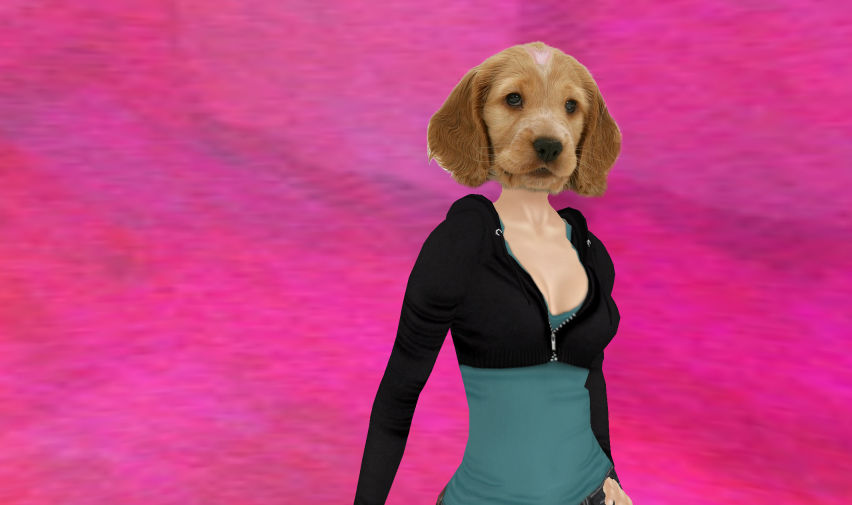
(Puppy head image taken from here.)

 This Public Service Announcement was brought to you by the Concerned Bloggers Association. If you would like to become involved, please contact Marleen Vaughan for more information.